

You often hear about letlalo la nappa when people talk about fancy things. Nappa leather is special because it feels soft right away. People like nappa for its smooth feel and great quality. This leather comes from animal hides that are picked with care. Nappa feels nice on your skin and gives comfort. When you see something made from nappa, you know it looks nice and lasts a long time.

Lintlha tsa bohlokoa
- Nappa leather feels soft and smooth. It is nice to wear and touch. It comes from good animal hides like calf and lamb. These hides make it feel fancy. Nappa leather is strong and can last many years. U hloka ho clean and care for it hangata. People use this leather in fancy things like car seats, lijaki, le mekotlana. It looks very nice. If you want the softest nappa leather, pick ones made from young animal hides.

Nappa Leather ke Eng
Definition and Origins
Nappa leather is different from other leathers. It is full-grain leather from the top layer of animal hides. This part is the softest and most natural. People like nappa leather because it feels smooth and strong. It does not have much finishing. When you touch nappa, it feels soft and bends easily.
Did you know? Nappa leather was first made in Napa Valley, California, ho 1875. Emanuel Manasse, who came from Germany, made a new tanning process at the Sawyer Tanning Company. His way made nappa leather famous for being soft and tough. Rich people in California liked nappa gloves. They felt fancy and lasted a long time.
Nappa leather became a sign of good quality and comfort. The special tanning and careful hide picking make nappa unique. If you choose nappa, you get leather with a long history and a great name.
Animal Sources
Nappa leather can come from many animals. Each animal gives nappa its own feel. Here are some common ones:
- Calf: Calf hides make nappa very soft and smooth. The grain is fine and feels gentle.
- nku: Lamb hides make nappa light and buttery. You feel the softness right away.
- Kid goat: Kid goat hides make nappa bendy and give it a soft texture.
- Linku: Sheep hides help nappa stay airy and comfy.
- Khomo: Cow hides make nappa strong and tough.
- Kolobe, kgama, horse: These hides are used less often.
Nappa leather is useful for many things. The hides keep their real texture because nappa is not changed much. This makes the leather feel real and look nice. Nappa leather also lets air through and gets better as it gets older.
Keletso: When you pick nappa, you get leather that is soft, e matla, and looks natural. The animal it comes from changes how it feels, so you can find nappa that fits what you want.
Nappa leather is special because it uses the best part of the hide. You get leather that feels good, nka nako e telele, and stays pretty as it ages. If you want gloves, lijaki, kapa litulo tsa koloi, nappa gives you comfort and style every time.
Unique Characteristics of Nappa Leather
Softness and Texture
When you touch nappa leather, it feels very soft. This softness makes nappa different from other leathers. The smooth feel comes from using the best animal hides. The tanning process is careful and keeps the leather nice. Nappa keeps its natural grain and marks, so it feels fancy. You can find this soft leather in litulo tsa koloi, mekotlana ea matsoho, le baki. These things need to feel nice and look special, so nappa is used a lot.
- Nappa leather is known for being very soft.
- Young animal hides, like calf, nku, and kid goat, make nappa smooth.
- The tanning process does not add much, so it feels buttery.
- Nappa bends easily and feels good for daily use.
Keletso: If you want something soft on your skin, nappa leather is a great choice.
Durability and Resistance
Nappa leather is not just soft. It also lasts a long time. Nappa keeps its shape and looks good for years. It can handle daily use and does not wear out fast. Experts test nappa leather to see how strong it is. They use many tests to check its strength and resistance.
| Test Name | Standard |
|---|---|
| Adhesion strength of finish | IUF 470 |
| VESLIC rubbing abrasion resistance | ISO 11640 / IUF 450 |
| Crocking resistance | AATCC 8 / ASTM D 5053 |
| Bally Flexing Crack resistance | ASTM D 6182 / IUP 20 |
| Newark Flexing Crack resistance (W-flex) | ASTM D 2097 |
| Wyzenbeek (Wyco) Oscillatory Abrasion resistance | ASTM D 4157 |
| GM Seam Wear or Welt / Stahl Seam Wear | STM-450 |
| Rotary (Taber) Ho khopa | ASTM D 7255 |
| Blocking resistance | ASTM D 6116 |
| Cold Crack resistance | ASTM D 6075 |
| Dynamic (Maeser) Ho hanyetsa Metsi | ASTM D 2099 |
| Ho Leleka Metsi | 3M water/alcohol drop |
| Oil Repellency | AATCC 118 / 3M |
| Resistance to Bleeding (Ho silafatsa) | ASTM D 6012 |
| Colorfastness and Transfer of Color to Washing | ASTM D 2096 |
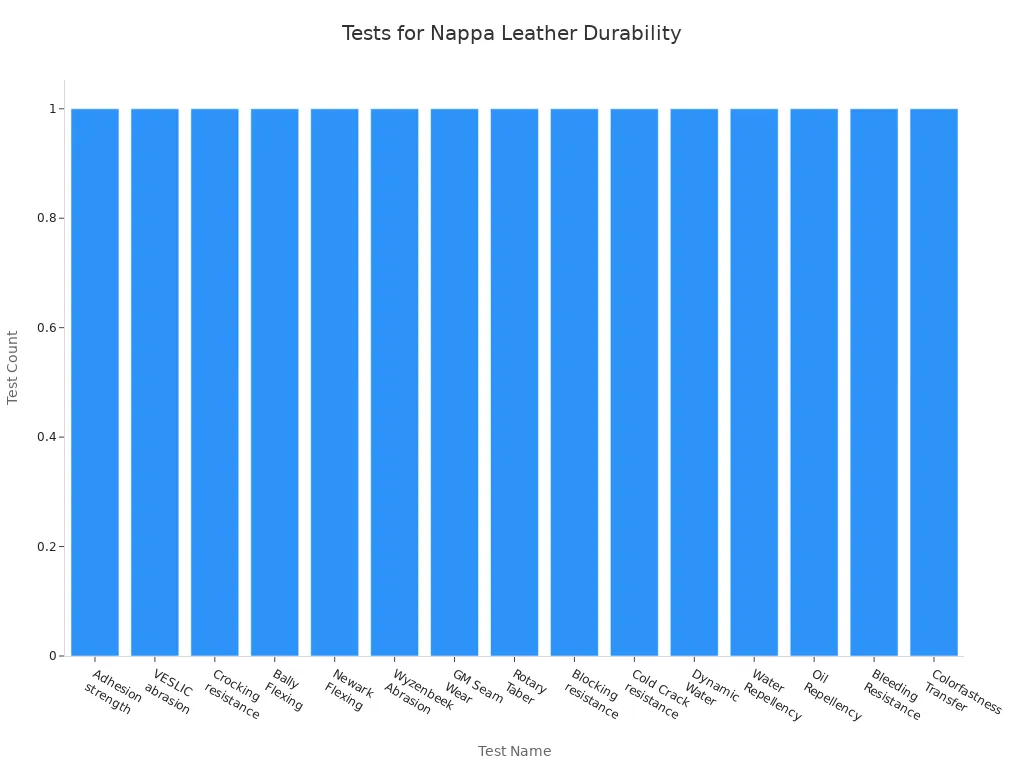
Nappa leather is good for things you use every day. But it can be hurt by water and dust, especially if it is not finished. Big drops of water can make dark spots on nappa. Other full-grain leathers may resist water and dust better because they get extra treatments. Leha ho le joalo, nappa feels smooth and soft, which many people like.

Natural Grain and Smell
You can tell nappa leather by its natural grain and light smell. Nappa has a smooth grain that feels gentle. The grain stays because nappa does not get much finishing. This keeps the leather looking real and soft.
Papiso e potlakileng ke ena:
| Sebopeho | Nappa Leather | Matlalo a Mang |
|---|---|---|
| Grain Pattern | Smooth and soft | E fapana (can be coarse or textured) |
| Scent | Mild and pleasant | E matlahadi, more distinct scents |
| Litšenyehelo | More cost-effective than aniline leather | Varies widely depending on type |
Nappa leather smells mild and nice, not too strong. Other leathers can have a stronger smell. The natural grain and gentle scent make nappa feel fancy. You get something that looks and smells nice, perfect for people who want luxury.
Hlokomela: Nappa leather keeps its natural grain and smell because it does not get much finishing. This is why it feels buttery and stands out from other leathers.
Nappa leather gives you softness, sebopeho se boreledi, and a natural look and smell. You get comfort, setaele, and a special feel every time you pick nappa.
How Nappa Leather Is Made
Pata Khetho
When you want to know how is nappa leather made, you start with the hides. You need high-quality hides to make nappa leather. The type of animal matters a lot. You often see nappa leather made from lamb, podi, or kid. These animals give you soft and flexible hides. Younger animals make nappa even softer and more luxurious.
- The animal type, like lamb or kid, changes how soft and strong the nappa leather feels.
- Young animals give you hides that feel smooth and bend easily.
- Natural grain and markings stay on the leather, making each piece of nappa unique.
You can see the difference when you touch nappa. The natural grain and soft feel come from careful hide selection. High-quality hides help nappa leather keep its beauty and comfort for a long time.
Keletso: If you want nappa leather that feels extra soft, look for lihlahisoa made from young animal hides. These hides make the leather feel gentle and special.
Chromium Tanning Process
After you pick the hides, you move to the tanning step. This is a key part of how is nappa leather made. Nappa leather uses a special process called chromium tanning. You use chromium salts to treat the hides. This step makes nappa leather soft, boreledi, and strong.
- Chromium salts help nappa leather stay flexible and last longer.
- The tanning process only takes a few days, so you get soft nappa quickly.
- Nappa keeps its smooth texture and natural grain because of this method.
You get nappa leather that feels buttery and looks beautiful. The chromium tanning process also helps nappa resist wear and tear. Many people choose nappa for car seats, lijaki, and bags because it stays nice for years.
Leha ho le joalo, you should know that making nappa leather can affect the environment. The tanning process uses a lot of water—up to 17,000 liters for just one square meter of leather. Chromium salts can pollute water and soil if not handled right. Some forms of chromium are dangerous and can harm people and nature. The leather industry also adds to deforestation and greenhouse gases because of cattle farming.
Hlokomela: When you buy nappa leather, you get a product that feels soft and lasts long, but you should also think about how it is made and its impact on the planet.
Nappa leather stands out because of the careful hide selection and the chromium tanning process. When you ask how is nappa leather made, you see that every step matters. You get nappa that feels soft, looks natural, and stays strong, but you also need to think about the environment.

Nappa vs Other Leathers
Full-Grain and Top-Grain Comparison
You might wonder how nappa leather compares to other types like full-grain and top-grain leather. Full-grain leather comes from the top layer of the hide. It keeps all the natural marks and grain. This type of leather feels strong and looks rugged. Top-grain leather also comes from the top layer, but workers sand or buff the surface. This makes it smoother but removes some of the natural look.
Nappa leather stands out because it uses full-grain hides, but it feels much softer than most full-grain or top-grain leathers. You notice the difference right away when you touch nappa. The surface feels buttery and smooth. Most full-grain leather feels firmer and thicker. Top-grain leather can feel stiff, especially at first.
Here is a quick table to help you see the differences:
| Sebopeho | Nappa Leather | Letlalo la Mabele a Feletseng | Letlalo la Top-Grain |
|---|---|---|---|
| Bonolo | Very soft | E tiile | Smooth but less soft |
| Ho tenyetseha | Phahameng | E itekanetseng | E itekanetseng |
| Natural Grain | Visible | Visible | Less visible |
| Processing | Nyenyane | Nyenyane | Sanded/Buffed |
| Tšebeliso e Tloaelehileng | Thepa ea mabothobotho | Boots, mabanta | Mekotla, thepa ea ka tlung |
What Sets Nappa Apart
Nappa leather has qualities that make it special. You get a leather that feels soft and flexible. Nappa is usually thinner than other leathers. This makes it perfect for things you touch every day, like car seats, lijaki, le mekotlana. You will notice that nappa leather bends easily and feels gentle on your skin.
Nappa stands out because of its unique tanning process. Workers use mineral tanning with chromium sulfate or aluminum. This method gives nappa its soft and supple texture. You will find that nappa leather keeps its natural look and feels luxurious. The minimal processing helps nappa keep its natural grain and mild scent.
Industry experts point out several reasons why nappa leather is different:
- Nappa leather is more flexible and thinner than most other leathers.
- The softness and minimal processing give nappa a luxury feel.
- The special tanning process makes nappa leather soft, tenyetseha, le e tšoarellang.
- Nappa keeps a natural appearance, which many people love for high-end products.
Keletso: If you want a leather that feels soft, looks natural, mme e nka nako e telele, nappa leather is a smart choice.
Nappa leather gives you a mix of comfort, setaele, le matla. You can see and feel the difference every time you use a product made from nappa.
Lisebelisoa, Melemo, and Cons
Likopo tse Tloaelehileng
You can find nappa leather in many fancy things. It is used in different areas. Here are some common ways people use it:
- Likoloi tsa ka hare: Many expensive cars, like BMW and Porsche, have nappa leather seats. These seats feel soft and let air through. You feel comfortable every time you sit.
- Feshene: Designers use nappa for jackets, mese, and dresses. The leather feels smooth and bends easily. Clothes made with nappa look and feel special.
- Thepa ea ka tlung: Nappa is found in fancy furniture. Ottomans and chaise lounges often use this leather. It gives a soft and rich feel.
Nappa leather is easy to notice in these products. It feels soft and looks nice. You can tell the difference when you touch or see these items.
Melemo
Nappa leather has many good points. It feels fancy and lasts a long time. Here are some main benefits:
- Very good quality and a soft, rich touch
- Strong and lasts for many years
- Looks stylish and fits many styles
- Good for people with sensitive skin
- Easier to clean than some other leathers
- Soft and bends easily, great for daily use
- Keeps its natural grain and smooth look
- Stays nice even with lots of use
Nappa gives you both style and comfort. You get something that is useful and looks great.
| Mofuta oa Letlalo | Litšobotsi tsa ho phela nako e telele | Litlhoko tsa Tlhokomelo |
|---|---|---|
| Nappa Leather | Durable with proper care | Requires adequate maintenance |
| Matlalo a Mang | Varies by type | Varies by type |
Mefokolo
Nappa letlalo also has some bad sides. It costs more than other leathers. Making nappa is hard, so the price goes up. You need to take care of it often to keep it looking good. If you do not clean it, stains and scratches can show up fast. Nappa is easier to scratch and stain because it does not get much treatment. If you do not care for it, it can wear out over time.
Hlokomela: Nappa leather feels fancy and comfy, but you must care for it to keep it nice.
Think about the good and bad before you pick nappa. If you want something soft, pretty, and strong, nappa leather is a good choice. Hopola feela, it needs care to stay looking great.
Nappa Care Tips
Ho hloekisa
You want your nappa leather to look and feel its best. Cleaning nappa starts with gentle care. Always use a soft microfibre cloth to dust the surface. This helps remove dirt without scratching. Bakeng sa tlhoekiso e tebileng, pick a mild leather cleaner that is pH-balanced and made for nappa. Leather Master makes special products just for uncoated or nappa leather, so you can trust these for safe results.
If you wonder how to clean nappa leather, latela mehato ena:
- Take a lint-free cloth and gently buff the leather.
- Use a cream-based, non-alkaline cleaner to keep the natural oils in the nappa.
- Test any cleaner on a hidden spot first.
- Bakeng sa matheba a manganga, dampen your cloth with lukewarm water or use a soft-bristled brush.
- Blot extra moisture with a clean towel.
- Let the nappa leather air dry away from direct heat.
Keletso: For light stains or scuffs, a white eraser can help. Always use gentle pressure.
You can also use a leather conditioner after cleaning. Massage it in with a soft cloth. This keeps your nappa soft and helps it last longer.
Tlhokomelo
Good nappa leather care means more than just cleaning. You need to condition and store your nappa the right way. Conditioning keeps the leather fibers flexible and stops them from drying out. Use wax, oli, or cream made for nappa. Apply it in small circles with a soft cloth.
Here is a table to help you know how often to condition your nappa leather:
| Usage Type | Conditioning Frequency |
|---|---|
| Tšebeliso ea Kamehla | Emong le emong 2-3 likhoeli |
| Less Frequent Use | Emong le emong 4-6 likhoeli |
Store your nappa in a cool, dry place with good airflow. Use a breathable bag if you have one. This stops mold and keeps your nappa leather from cracking. Never put nappa leather near direct sunlight or heaters.
Hlokomela: Regular cleaning and conditioning help your nappa leather stay soft, e matla, and beautiful for years.
If you follow these nappa leather care tips, your nappa will keep its luxury feel and look. You get the best from your nappa leather when you treat it with care.
Nappa leather gives you both comfort and a fancy feel. It is very soft and smooth. Nappa also shines a little and lets air pass through. People like nappa for expensive things because of these features. The table below shows how nappa is different from other leathers:
| Key Quality | Nappa Leather | Matlalo a Mang |
|---|---|---|
| Ponahalo | Boreleli, mabothobotho | Often more rugged |
| Bonolo | E bonolo haholo | Can be firm |
| Ho tšoarella | Long-lasting with care | E fapana |
Nappa is a good choice if you want something nice and comfy. It costs more and needs more care than some leathers. But it looks great and lasts a long time if you take care of it. With the right care, nappa leather can stay nice for many years. It is a smart buy for people who want both style and comfort.
LBH
How can you check nappa leather for authenticity?
You can check nappa leather for authenticity by feeling its softness and flexibility. Genuine nappa feels smooth and supple. Look for a natural grain and a mild scent. Ask for product details or certificates from trusted sellers.
Does nappa leather scratch easily?
Nappa leather can scratch more easily than some other leathers. The surface stays soft because it has minimal finishing. You should handle it with care and avoid sharp objects.
Is nappa leather waterproof?
Nappa leather resists water better than some leathers, empa ha e kenelle metsi ka ho feletseng. Water can leave marks if you do not wipe it off quickly. Always keep nappa leather dry when possible.
What products use nappa leather most often?
You often find nappa leather in luxury car seats, designer jackets, mekotlana ea matsoho, and high-end furniture. Many people choose it for its comfort and elegant look.
How do you clean nappa leather at home?
Use a soft cloth to dust the surface. Bakeng sa tlhoekiso e tebileng, pick a mild, pH-balanced leather cleaner. Test any product on a hidden spot first. Etsa hore moea oa letlalo o omelle hole le mocheso.
